Find Water Level Sensor Assembly for tanks, wells, and rivers
Source 30 Water Level Sensor Assembly options including capacitive, magnetic float, and radar types. Compare specifications like accuracy, temperature range, and IP ratings from suppliers in China to select the right solution for industrial or environmental monitoring.
Key considerations
Products List


Radar Water Level Sensors for Continuous, Non-Contact Level Measurement of Liquids.
$500.00 - $860.00
MOQ: 1 Pieces






Comprehensive Sourcing Guide
Strategic Sourcing Guide for Water Level Sensor Assemblies
Procuring water level sensor assemblies requires a rigorous approach that distinguishes between the diverse technologies available in the market. The term "Water Level Sensor Assembly" encompasses a wide spectrum of devices, ranging from capacitive and float-type switches to high-frequency radar sensors and piezoresistive transmitters. Buyers must navigate a complex landscape where technical specifications, material compatibility, and environmental resilience dictate the suitability of a specific unit for a given application. This guide outlines the critical factors for evaluating these components, ensuring that procurement decisions are grounded in verifiable data and industry standards rather than marketing assertions.
Technical Specifications and Operational Principles
The first step in sourcing is identifying the correct operating principle, as the technology dictates the sensor's performance envelope. The market offers distinct solutions based on the measurement method. Capacitive level sensors, for instance, operate on the principle of detecting changes in capacitance caused by the presence of liquid. These units often feature an analog output signal type and are designed for specific voltage requirements, such as an operating voltage of 5.0V. In contrast, float-type magnetic level switches utilize a mechanical float to trigger a reed switch, offering a robust solution for simple level detection.
For high-precision applications, radar sensors have emerged as a critical technology. These devices operate at high frequencies, such as 80 GHz, providing exceptional resolution down to 1 mm. The performance of radar sensors is further enhanced by a short warm-up time, typically around 1 minute, allowing for immediate data acquisition upon activation. When selecting a radar assembly, buyers must verify the cable length, which can extend up to 10 meters, and ensure the frequency matches the specific requirements of the tank geometry and material.
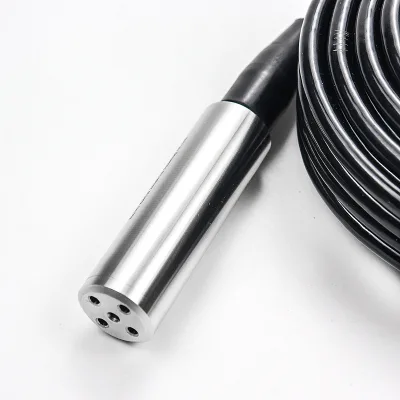
Piezoelectric and silicon piezoresistive types represent another category, often used for pressure-based level measurement. These sensors rely on the pressure exerted by the liquid column. A key specification for these units is the accuracy grade, which can be as precise as 0.2G, or accuracy percentages like 0.2%. The diaphragm material is critical here; 316L Hastelloy is a common choice for its corrosion resistance, while the process connection material may include 304 stainless steel or Hastelloy variants. Buyers must also consider the temperature range, as some assemblies are rated for -20°C to 80°C, while others, particularly those with specialized insulation, may withstand extreme conditions from -40°C up to +380°C.
Compliance and Certification Verification
In the industrial sector, compliance with international standards is non-negotiable. When evaluating a Water Level Sensor Assembly, buyers must verify that the product carries recognized certifications. The presence of RoHS (Restriction of Hazardous Substances) and CE (Conformité Européenne) marks indicates adherence to environmental and safety regulations within the European market and beyond. Some products may also carry CCC (China Compulsory Certification), which is essential for domestic sales in China.
It is crucial to distinguish between the certification status of the entire assembly versus individual components. While some listings may claim "Insulated" types with specific certification bundles, buyers should request valid certificates for the specific model number being procured. For example, a radar sensor assembly might be certified under CE and RoHS, whereas a piezoresistive pressure transmitter might carry a different set of approvals. The absence of a specific certification in the provided documentation should not be assumed to be a lack of compliance; rather, it necessitates a direct inquiry to the supplier to confirm the status.
Cost Drivers and Pricing Variables
The price of a Water Level Sensor Assembly is influenced by a complex interplay of factors, including the measurement technology, material composition, and customization requirements. Market observations indicate a significant price variance, with costs ranging from as low as $0.03 to as high as $860. This wide spectrum reflects the difference between basic switch components and high-end, integrated radar systems.
Several specific drivers influence the final cost. The material grade is a primary factor; assemblies constructed with 316L Hastelloy or high-grade stainless steel will command a premium over those using standard materials. Similarly, the level of customization plays a major role. Units that are "Customized" or "Available" for specific modifications, such as unique cable lengths or specialized mounting brackets, often incur higher costs due to the bespoke nature of the production process.
The Minimum Order Quantity (MOQ) also impacts the effective unit price. Sourcing data shows an MOQ range from 1 to 200 units. Buyers purchasing in smaller quantities may face higher per-unit costs, while bulk orders can leverage economies of scale. Additionally, the production process, such as "Integration" of multiple components into a single unit, can add value and cost. Packaging requirements, whether in a standard carton or a more protective wooden box, also contribute to the overall expense.
Typical Applications and Environmental Suitability
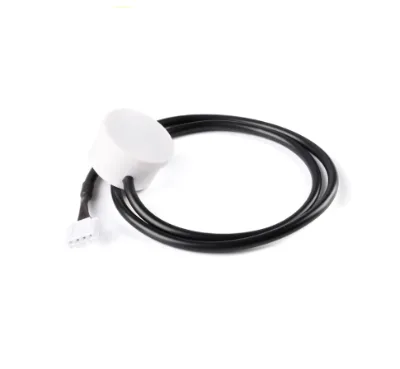
Selecting the right sensor assembly depends heavily on the intended application environment. The "Contactless" nature of certain radar and capacitive sensors makes them ideal for applications where the sensor must not come into direct contact with the liquid, such as in corrosive or sanitary environments. These units are often designed with an IP rating, although specific ratings should be verified against the application's dust and water exposure levels.
For applications involving aggressive chemicals, the "Corrosion Resistant" feature is paramount. Assemblies utilizing Hastelloy diaphragms and stainless steel process connections are suitable for harsh industrial processes where standard metals would degrade. The operating temperature range is another critical consideration. While standard sensors may operate between -20°C and 80°C, specialized assemblies with insulated properties can function in extreme environments ranging from -40°C to +380°C.
The mounting configuration is also application-specific. Options include "Pipe Mounting Bracket" solutions, "Flange mounted" designs, or "Thread mounted" configurations. The choice depends on the tank or pipe geometry. Furthermore, the "All in One" structure design is advantageous for applications requiring a compact, integrated solution that simplifies installation and reduces the potential for leakage points.
Supplier Evaluation and Origin Considerations
When evaluating potential suppliers, the geographic origin of the product can provide insights into manufacturing capabilities and logistics. Products sourced from regions like Shaanxi or Hefei in China indicate specific manufacturing hubs known for sensor production. Buyers should verify the "prod_origin" details to understand the supply chain dynamics.
Supplier evaluation should also focus on the "Years of Service" and durability claims. Some assemblies are rated for 50,000 hours of service, indicating a long operational lifespan. However, these figures should be treated as observations rather than guaranteed performance metrics for every unit. Buyers must assess the supplier's ability to provide consistent quality control and after-sales support. The "Customized" nature of many products suggests that the supplier must have flexible manufacturing capabilities.
Quality Control and Testing Protocols
Quality assurance is a critical component of the procurement process. Buyers should verify the "Production Process" to ensure that the assembly undergoes rigorous integration and testing. For instance, the "Integration" process implies that multiple components are combined and tested as a single unit, which can reduce failure rates compared to assembling components on-site.
Specific technical parameters serve as quality indicators. The "Weaving Density" of insulation materials, which can range from 70% to 95%, affects the thermal and electrical performance of the sensor. Similarly, the "Resolution" of radar sensors, often cited as 1 mm, is a key quality metric that must be validated. Buyers should request test results or calibration certificates that confirm these specifications. The "Accuracy Grade" of 0.2G or an accuracy of 0.2% are specific targets that should be met in the final product.
Long-Term Procurement Considerations
Sourcing water level sensor assemblies is not a one-time transaction but a long-term partnership. Buyers must consider the "Product Name" and "Series" to ensure compatibility with existing systems. For example, the "ARLGS-05" model or "AT" series may have specific interface requirements that must be matched.
The "Output Signal Type" is another long-term consideration. Whether the system requires an analog signal or a digital output affects the compatibility with the buyer's control systems. Additionally, the "Operating Current" of less than 12mA is a factor for energy-efficient systems. Buyers should also evaluate the "Display Type," such as LED or LCD, to ensure the interface is suitable for the operator's environment.
Finally, the "Standard" of the product, such as specific dimensional standards like 4*0.2mm² or 10X10X10 cm, must be adhered to for proper integration. By maintaining a focus on these detailed specifications and verifying them against the supplier's documentation, buyers can mitigate risks and ensure a successful procurement of water level sensor assemblies.
| Feature Category | Key Specifications to Verify | Typical Range/Observation |
|---|---|---|
| Operating Principle | Capacitive, Float, Radar, Piezoresistive | Analog, Contactless, Magnetic |
| Temperature Range | Operating limits | -40°C to +380°C (Insulated); -20°C to 80°C (Standard) |
| Material Composition | Diaphragm, Process Connection | 316L Hastelloy, 304 SS, Hastelloy |
| Accuracy & Resolution | Precision grade, Resolution | 0.2% Accuracy, 1 mm Resolution |
| Certifications | Safety and Environmental | RoHS, CE, CCC |
| Mounting | Bracket, Flange, Thread | Pipe Mounting, Flange Mounted |
| Power & Signal | Voltage, Current, Output | 5.0V, <12mA, Analog Output |
By adhering to these guidelines and focusing on the verifiable facts provided, buyers can navigate the complexities of the water level sensor market with confidence, ensuring that the selected assemblies meet the rigorous demands of their specific industrial applications.
FAQs
What operating principles are available for water level sensor assemblies?
Available principles include capacitive, float-type magnetic, radar, and piezoresistive types. Capacitive units often use analog output, while radar sensors offer 1 mm resolution at 80 GHz frequency.
Which certifications should I verify for these sensor assemblies?
Verify that products carry RoHS, CE, and CCC certifications. These marks indicate compliance with environmental and safety regulations, though specific model approvals must be confirmed with the supplier.
What temperature ranges do these assemblies typically support?
Standard assemblies operate between -20°C and 80°C, while insulated types withstand -40°C to +380°C. Select the range based on your specific environmental exposure requirements.
Can I find customized water level sensor assemblies with specific materials?
Yes, customization is available for materials like 316L Hastelloy diaphragms and 304 stainless steel connections. Buyers should specify unique cable lengths or mounting brackets during the procurement process.
How does the price of water level sensor assemblies vary?
Prices range from $0.03 to $860 depending on technology and materials. Basic switches cost less, while integrated radar systems with high-grade materials command higher prices.
What are the typical mounting options for these sensors?
Mounting options include pipe mounting brackets, flange mounting, and thread mounting. The choice depends on the tank geometry and whether a contactless or all-in-one structure is required.
Where are these sensor assemblies typically manufactured?
Products originate from manufacturing hubs in Shaanxi and Hefei, China. Buyers should verify the specific origin to understand supply chain dynamics and logistics for their orders.